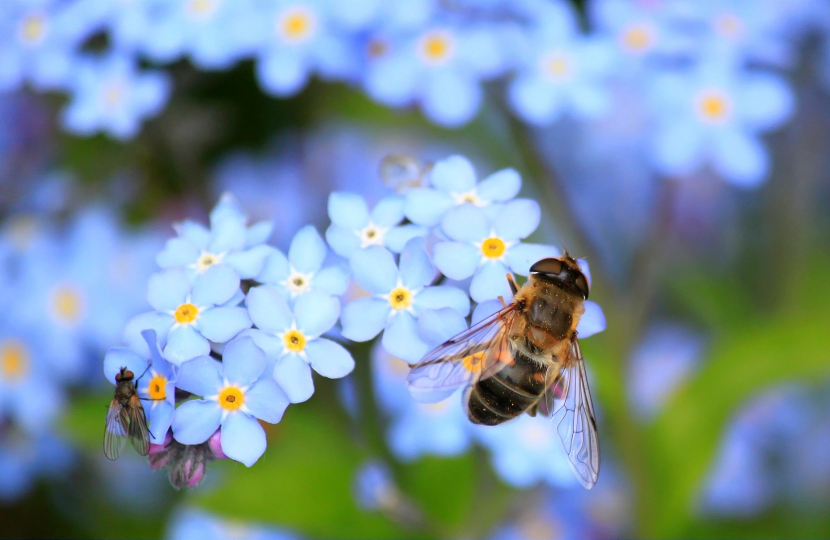
Pollinators are an essential part of our environment and play a crucial role in food production through pollination. The National Pollinator Strategy, published in 2014, was a ten-year plan which sets out how the Government, conservation groups, farmers, beekeepers and researchers can work together to improve the status of the approximately 1,500 pollinating insect species in England.
It includes dealing with habitat loss and the potential harm from pesticide use, invasive species and climate change. I am pleased that the UK's agriculture policies now help to improve biodiversity and support habitats for pollinators, building on existing agri-environment measures to enable many more farmers and land managers to take positive action.
Our world-leading Environment Act committed us to halt the decline of species by 2030. I want to see bigger and better flower-rich habitats to support pollinators across the country; healthy populations of pollinators which are resilient to threats including climate change; no further extinctions; awareness of the needs of pollinators and real action to support pollinators
In 2020, we published the Healthy Bees Plan 2030 which works alongside our other long-term strategies. Developed in consultation with bee health stakeholders, it is aimed at sustaining the health of honey bees and beekeeping in England and Wales over the next decade. Within this plan, there are measures to increase biosecurity, minimise disease risk and improve the flow of knowledge sharing. I am pleased to share that as of 2025, we are meeting our existing commitments.
Neonicotinoids
I supported the last Conservative Government in restricting neonicotinoids to protect pollinators, and emergency authorisations for pesticides are only granted in exceptional circumstances where diseases or pests cannot be controlled by any other reasonable means. These emergency authorisations can provide short term availability of a product if the applicant can demonstrate that this addresses a danger which cannot be contained by any other reasonable means, that the use will be limited and controlled and that the necessary protection of people and of the environment can be achieved.
Emergency authorisations are also used by countries across Europe, 10 EU countries including Belgium, Denmark and Spain have granted emergency authorisations for neonicotinoid seed treatments since 2018. Under EU legislation, Member States may grant emergency authorisations in exceptional circumstances. The UK’s approach to the use of emergency authorisations did not change as a result of the UK’s exit from the EU.
Cruiser SB
The British beet sugar industry applied for an emergency authorisation to use neonicotinoids following the extreme and unprecedented impact of Virus Yellows disease, which is spread by aphids, on the 2020-23 sugar beet crops.
At least 40% of the crop nationally was affected, and overall yields for the 2020/21 ‘campaign’ (harvest) declined by approximately 25% on the five-year average. Some individual growers in the worst impacted regions saw their yields destroyed by as much as 80% as a result of Virus Yellows.
The application for the use of Syngenta’s Cruiser SB was for England only and the duration of authorisation was strictly limited to the period required to allow supply of the product. Sugar beet is also a non-flowering crop, therefore not attractive to bees.
This exceptional use of Syngenta’s Cruiser SB was strictly controlled and conditions of the authorisation include reduced application rate as well as a prohibition on any flowering crop being planted in the same field where the product has been used within 22 months of sugar beet and a prohibition on oilseed rape being planted within 32 months of sugar beet.