Natural England – July 2026
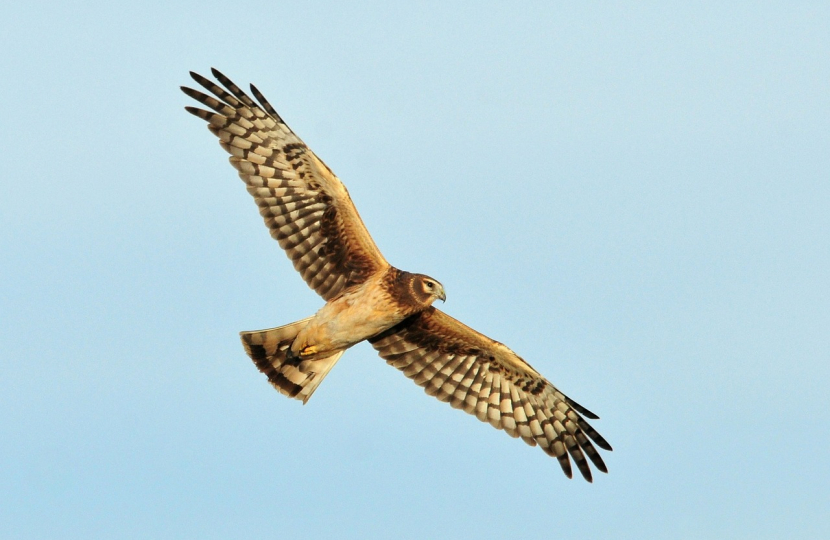
Hen Harriers are one of the UK’s rarest birds of prey. However, according to Natural England, they are at the centre of a long-running conflict. Despite being protected by law, they are illegally killed because they are predators of red grouse.
All wild birds are protected under the Wildlife and Countryside Act 1981, and police forces are assisted in their investigations by the National Wildlife Crime Unit. While Operation Owl, a national campaign working to increase reporting of criminal activity against wildlife, has been a success in recent years, law enforcement alone has not been successful in improving their numbers.
To help remedy this, a method known as brood management was trialled under the last Conservative Government to improve tolerance of Hen Harriers on grouse moors. Natural England issued the first experimental licences in 2018 under the Hen Harrier Action Plan and the trial concluded in 2024.
Brood management involves the temporary removal of eggs/broods of chicks under licence, to reduce Hen Harrier nest density, rearing them in captivity, and releasing the young birds back into the wild at a suitable location, once they can fly and disperse. This trial provided a lawful way to reduce predation of nesting Hen Harriers and promote coexistence between them and grouse moor interests.
Results from Natural England’s final report of the trial showed that Hen Harrier numbers increased substantially in areas managed for grouse shooting where brood management was available (but not in other areas) and that illegal killing continued throughout, but no crime hotspots were identified within brood management areas.
Conservation groups like the RSPB continue to oppose Hen Harrier brood management because they believe the practice removes healthy chicks instead of tackling the root problem of illegal bird killing on commercial grouse moors.
Most recently, the Labour Government has launched a new call for evidence to better understand the impacts of rearing, releasing and shooting gamebirds on wildlife, the environment and animal welfare. The review seeks to gather evidence covering the effect on wildlife and protected habitats, the spread of disease, animal welfare, wildlife crime and the use of natural resources.
It will also gather evidence on how gamebirds are bred and kept before they are released. Gamebirds reared for shooting are not covered by the same animal welfare rules as poultry farmed for food, and the evidence will be used to help understand whether the current animal welfare protections for gamebirds are adequate and whether similar welfare requirements should be developed.
This call for evidence follows the publication of the Animal Welfare Strategy and Land Use Framework for England, which can be accessed here.
The call for evidence will run until Thursday 1 November 2026 and can be accessed here.
Additional information on this subject is available below:
Natural England’s final report of the Hen Harrier Brood Management Trial can be found here.
National Wildlife Crime Unit - Bird of Prey Crime can be found here.
House of Commons Debate on Driven Grouse Shooting from 2025 can be accessed here